What a bland car to talk about, and this isn’t the first one that we’ve had the pleasure of ushering into the automotive afterlife. Why is this one getting an honorable mention? Well that’s a good question.
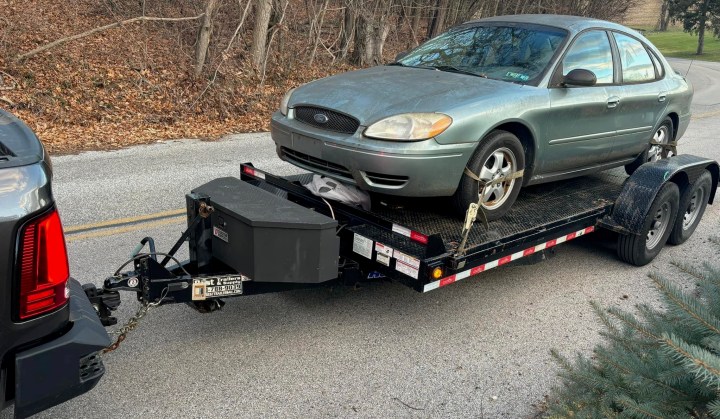
While we don’t have the history on this bland, green, bubbly, behemoth of boring we can make some observations. Notice the subtle but boring green paint that blends nicely with the dirt and tree gunk all over it. Don’t let that green paint fool you, it’s high-quality paint that held up well since it was first applied in 2004. Not only does it have a hint of shine left, but by some miracle, that paint is structural! That’s right, the only thing that was holding this turd together was that paint and lots of hope.
What else can we say about this thing? Well it ran and drove seemingly without issue for the whole 1,000 feet that we moved it. This isn’t a feat on its own, cars are supposed to move under their own power. Typically we don’t get many junkers that still run… hence the reason they come to us for their final resting place… scrap. The real miracle here is the odometer on this thing showed 272,733 miles! That’s right over 1/4 million miles… on a FORD TAURUS!
Yeah, yeah, yeah we don’t buy it. This is clearly some kind of glitch. That cluster was re-programmed as a joke! No way the car hasn’t had a dozen motors and transmissions in that mileage. Well as near as we can tell, it was mostly original. The transmission looks like it had a rebuild, its got a pretty maroon painted torque converter. The engine? who even knows… it ran… it had the original catalytic converters still attached with material still inside.
Well miracles happen and this is clearly one. The last Ford Taurus we sent to rest had just over 120K before it’s owner deemed it not worth repair when the transmission gave its last hooraahhh. Well this one made it a lot further only to be met by its demise to which there is no cure, rust. Sadly the Pennsylvania state safety inspectors just couldn’t look past the lack of rockers, floors, door bottoms, fender wells… wait, they couldn’t help but look past all of it since none of it existed anymore. Well regardless Pennsylvania has some kind of rules about cars having basic body panels still physically in place to be on the road.
So are you a die hard Ford Taurus fan? Do you want something unique that may never happen again? If so here is your chance to own a part of Ford Taurus history, head over to eBay and buy this thing from our store. Power it up and hang it on the wall, admire that hard earned 272,733 miles. Who cares if the car was merely just rust covered paint after 20 years. We can pretend like those miles were on the original equipment but we all know that thing probably had a solid 20, 30, 40 or more engine and transmission swaps in that time frame. Let’s be real this thing isn’t your moms 1993 green Toyota Camry with 8 million miles and ticking. How many times has that Camry had its oil changed??? Only 2 why waste the money it doesn’t need maintenance its a 1993 Toyota Camry! Well just remember IF that Camry ever quits, we’ll buy it!
We have shown some different tear downs of automotive parts and the end of a Honda Accord shell, so where does it all go? Well we utilize a 16′ 15K GVW Hawke dump trailer to haul our ferrous scrap. Ferrous scrap is anything containing iron (Fe) in it. We load the trailer mostly with the Bobcat but small items we can toss in by hand.
The Honda Accord shell can be seen sticking out the top and there is a Ford Taurus husk underneath that which can’t be seen. All of the random parts and pieces we can’t sell or any other ferrous metal scrap gets tossed in as well. Any unusable, damaged, non-selling auto parts will go in the rolling dumpster and off to recycling.
The process at the recycling facility is pretty simple. If you are not registered you must provide valid identification to register and you pull your vehicle loaded with scrap on to the scale to get a gross weight. You then pull off the scale out into the yard and get to unload your truck, trailer, pockets or whatever else you have you scrap metal stored in. For us this means opening the dump trailer doors and dumping it. It is always fun to see what people bring in to recycle like all the empty steel barrels that were dropped off before we arrived. They use heavy equipment like an excavator and a crane to move things around the yard.
Doors on the trailer open, dump out the scrap and pull forward to let it all come out of the trailer. Simple and quick with a dump trailer. It wasn’t always easy, we would use a flatbed trailer and rely on the crane to snatch the scrap off the trailer for us. There may be some pictures floating around of various scrap runs we made over the years if you poke around the webpage more.
Once the trailer is empty and cleaned out we ride back across the scale to get an empty weight. We then take our scale ticket inside and collect some money for the scrap we sell. The prices do vary based on market price so its not always the same. For this particular trip we only sold our ferrous scrap for the day, 6,260 pounds. The recycling center pays for all kinds of materials that we have talked about in previous articles such as cast aluminum, brass, brake rotors, auto-part cores and more.
There you have it the start to finish for junk cars that MackleCo deals with. From the scrap yard they will go off to a shredder and processor to be melted down into something new.
So we have dove into some of the car component tear downs and how we sort everything out but what about the whole car? Well here is a quick rundown of a Honda Accord that has seen better days. We picked the car up complete and still rolling however it seems the fuel pump went out and it wasn’t getting fuel to stay running. Fun to make it run on ether, but it wont run for long. Hondas are great reliable cars that never quit why not toss a fuel pump in and send this one for a few million more miles? Well as we looks at the car closer it just wasn’t worth fixing.
You can see the black tape holding the front bumper on which is just the beginning of this poor cars misfortune. The clips that hold the bumper on are broken hence the tape. The inner fender is also missing… on both sides. Minor details, but as we investigated the car had a hokey at best respray job. There were 4 mismatched tires that were bald adding to allure of this beauty. The interior was rough, it was littered with cigarette butts and ashes all over which also brought along a smokey smell.
Let’s get back to the re-spray job… why was this car painted? Well it turns out car must have been side swiped in some fashion. The left driver’s side doors were silver inside meaning they must have come from a different car. To add to the body work the rear quarter panel had a fair amount of shoddy Bondo work done to it. The right passenger side of the car didn’t have much notable either. The doors were original, we think, but they had dents and scrapes. Needless to say this poor car has seen better days and is off to scrap!
So what do we do with it other than scrap it? Well there are still plenty of usable parts that we can test and check. The tail light lenses weren’t broken or leaking water, the window switches work, the steering column switches work, sun visors are still usable the list goes on. We check and test everything we can and anything that is working gets saved to be hopefully sold on eBay. As we tear the car apart we throw all the unusable parts, miscellaneous nuts, bolts, screws and more into the dump trailer to head to scrap. We sort out and save any non-ferrous metals such as wiring harness, cast aluminum brackets, the radiator and AC condenser, electric motors and more.
Once we have the car all broken down we are left with an empty shell that gets sent to recycling. To save space in the trailer and get the most out of our space we cut the roof pillars and smash the roof down into the body and compact the shell as much as possible. We do this with the Bobcat and then we use the Bobcat to put the shell in the dump trailer. Below is a quick video of the process and you can see there isn’t much left of the car that hasn’t been yanked apart.
Crushing what’s left of the Honda Accord.
We will keep capturing more of the process as we go so keep tuned. We have a few more candidates that are headed to scrap here shortly!
So we tore apart some transfer cases and a motor that we just couldn’t find a new home for, but what about transmissions? They are a little more tedious to get apart, but they hold all kinds of neat bits and pieces for scrap art. This tear down we have 2 front-wheel drive transmissions (FWD), one from that glorious Ford Taurus we wrote about a little while back and a rear-wheel drive (RWD) transmission.
The rear wheel drive transmissions are a little easier to get apart than the front wheel drive, but keep in mind these are going to scrap, so we can get out a big hammer if needed! The worst part about transmissions is no matter how well you drain them or try to pump the fluid out, it always seems like there is an infinite amount hiding inside. The valve bodies are notorious for hiding a bunch of fluid.
As before we have our oil collection bucket out, and we threw down some old towels and rags to catch anything the bucket can’t. There are certainly better trays, pans, collection systems out there, but our main goal is to collect and recycle as much fluid as possible and the rest can land on a rag and be disposed of properly. We aren’t doing this every day so using up a few rags isn’t the worst thing in the world.
Lots and lots of small bolts, clips, pins and other hardware holding these things together. The valve bodies are always fun because not only are they hiding some transmission fluid but there are all kinds of neat little channels, springs, odd shaped rods and other parts inside. The valve body is the heart of any transmission and moves the fluid about the transmission to the appropriate gears and clutches at the right time so that the car travels down the road smoothly.
Under the valve body of this transmission we find a big old chain and we start seeing some gears. The chain connects the input shaft of the transmission to the drive gears and output shafts for the transmission. Once we get those gears and chain out of the way we can start seeing the clutch packs, and gears inside the transmission.
Same as the motor and transfer case tear downs we are collecting the steel and other scrap waste in our orange bucket today, we have interesting parts to go off to be used in artwork in the clear tote and the cast aluminum in its own pile for recycling. The parts we saved for artwork include some of the clutch pack housings, the output shaft and there are some planetary gear in there as well which are always fun. The best part about taking transmissions apart is we don’t have to figure out where everything belongs, because it isn’t getting put back together!
Just a quick paragraph and picture for the rear wheel drive transmission. It has a lot of the same parts as the front wheel drive transmission just in a different configuration. The valve body can typically be found on the bottom side. The clutch packs, gears, input and output shaft are all arranged longitudinally in the transmission housing. Since these transmissions are a little more straight forward they tend to come apart easier, and well if they want to put up a fight they might just get a few love smacks with a big hammer.
That’s all we have for our latest scrap tear down. We will have to follow up with how the gears and other items we are collecting get re-purposed. Maybe MackleCo will get some new additions to our advertising crew here in the near future.
Let’s get back to why we started MackleCo… salvaging and selling usable parts from unwanted, derelict vehicles and recycling whats not worth saving. It started as a hobby and a way to make a few bucks while sourcing parts for various project cars. There will always be something special about poking around the u-pull it yard on a Saturday checking out wrecks, abandoned cars and projects that have seen better days looking for those few parts. After so many failed trips to the u-pull it you would turn to Craigslist, back when it was all the rage, to see if someone listed what you needed. Eventually when Craigslist hunting failed it turned into looking for a complete car with a bad motor, bad transmission, or maybe one that was rear ended if you didn’t need the back end.
Like that MackleCo became an official side job. The first car we tore down and sold the parts from was a 1990 Acura Integra sedan that had been t-boned in the driver side. We started off buying cars we liked, cars we needed parts off, and sometimes a car that could be fixed up and driven for the next beater. As time went on we started taking any car that we could make a few bucks on for the next project. Now MackleCo buys it all! Any unwanted car we will buy it and make the most of what may left.
So there’s the quick backstory as to how MackleCo made it to 2024, but what exactly does MackleCo do with these cars? Well it’s simple, we part them out! There is something relaxing taking apart a car and not worrying about losing the bolts or if you accidentally (it’s never an accident) break a piece. If the car runs we try to drive it and see it the drive train is salvageable. If it doesn’t run we still check as much as we can such as lights, switches, handles and more. Any good parts we can remove without damage we try to clean up and sell.
Sometimes good parts just never find a new home. There are tons of car models out there that don’t seem to generate a huge market in used parts either because they never break or people never fix them. We’re talking about the 1993 Toyota Camry… they never break, and if they do, they are broken beyond repair. Let’s not get too far off topic, ranting about the incredible reliability of the Toyota Camry. So what happens if we can’t sell parts we’ve salvaged? Well, at some point we need to free up space, so those parts just get sent to recycling.
The automotive world is full of core buyers. What’s a core? A core is simply an old car part that can either be further broken down to get the precious metals out, or a part that can be rebuilt and refurbished then sold again. There are cores for all types of items such as lights/lenses, brake parts, computers, engines, transmissions and just about anything else on car. So why does this all matter? Well when we have motors, transmissions, brake parts and more that cant be sold or used we typically sell them as cores.
Motors and transmissions can be sold as cores or by their weight. We haven’t had any luck fetching a better price on motors and transmissions as cores so we normally just sell them by weight. More recently we started taking some time to tear down motors and transmissions and sort out the various metals. While the time involved to tear these items down just isn’t worth the extra money that can be made sorting the metal we found an ulterior motive… to get out all the fun stuff!
What exactly is the ‘fun stuff’ in a motor or transmission you ask? Well that can be any unique little piece that can be repurposed for scrap metal art. We supply our awesome junk car model shown below with these pieces for his scrap metal art, all we ask is that we get some artwork in return. Some of these items like pistons get turned into the piston men that we use in advertising our firearms.
The Scrap Cat is another piece that was made with mostly odds and ends from transmissions we tore apart. The valve body plate was repurposed for some body panels, some gears and timing chain to build the tracks and other various input/output shaft pieces thrown in as well.
It is really fun to see some of the pieces take shape from old auto parts. Below are some pieces that have a fair amount of auto scrap used in them.
Let’s dive into some tear downs. We have a motor, a few transmissions and transfer cases that just couldn’t find a new home. We need to free up some space and even though these parts came from running and driving cars we just couldn’t sell them. No worries we will take a look at how they come apart and give an overview of our tear down process.
First up is a transfer case that just couldn’t find a new home. The transfer case housing is made of cast aluminum and its got some goodies inside perfect for some new art pieces. We keep a few buckets and rags sitting around to help contain the mess. We drain any fluids into our 5 gallon oil bucket first. This oil goes off to be recycled. We pop off the gear selection motor, then all the housing bolts. We are collecting scrap for recycling in the orange bucket and the interesting pieces for art in the white bucket today.
There isn’t much to a transfer case so we made quick work of it. The input and output shafts along with the chain and gears get saved for artwork. We toss any smaller bolts, and other random items into the recycle bucket. It is important to pull all of the ferrous metal out of the cast housing so that we can sell the housing at recycling as clean cast aluminum. Usually there is a small tolerance of ferrous material allowed in the clean cast category, but we always try to get it as clean as possible when we strip down components like this.
Next up on the block is a Chevrolet 3100 V6 engine that just didn’t find new life. This motor had around 130K miles on it, ran like a top and surprisingly didn’t have the intake manifold gasket leaking as they are known to do. It is always fun to get a look inside an engine and see the inner working parts.
Parts we are saving from this is most of the cylinder head pieces such as valves, valve springs, push rods and rockers. The pistons, the camshaft along with gear and timing chain will all get saved as well. All these items are great pieces for art. As we break down the engine we separate items into the cast aluminum pile, the ferrous scrap pile, and lets not forget the artwork pile.
The oil from this engine was drained into our collection bucket for recycling. As we dig down into the motor the heads come off and we remove the push rods, rocker arms valve springs and valves. All of these parts for art get set aside and tossed into the bucket. On this motor the engine block is cast iron so it will go into ferrous recycling pile after we get the pistons out. That about finishes up the life of this motor. Some of its pieces are going off to be used in scrap metal art, the rest of it will get sold as scrap metal. Cast aluminum brings a little bit more than the ferrous scrap but at the end of the day it will all find new life.
That’s our latest scrap sorting adventures at MackleCo. Stay tuned for the next tear down to get an inside view of some more automotive parts.
Maybe you’ve heard of GForce Arms, or maybe you’re scratching your head wondering about this brand. It seems there is a new name in firearms popping up every day and honestly its hard to keep track. Well our one supplier has been running deals on different GForce Arms shotguns and at the low prices they sell for we took the leap.
So what exactly are these shotguns? Well GForce Arms imports their shotguns from Turkey. Their big sellers seem to be semi-auto shotguns, however they do have a variety of different firearms looking at their webpage. The models we grabbed for our inventory are the GF00, GFY-1 and the GFBP. We haven’t taken any of these out to the range to give them a test but let’s go over what we got and first impressions.
The GF00 is an AR style shotgun. It comes with 1 5-round magazine, flip up sights, angled fore-grip and adjustable cheek rest. This model has a lot of bang for the buck! It has a decent weight to it and has a quality feel to it. The weight should help with the recoil on this shotgun but we can speak from experience. It is recommended that you run 1400 FPS ammo through these for the first 100 rounds or so to break them in. With a new firearm everything will be tight and the higher velocity ammo should provide extra gas to help with cycling issues. We got ours in black but they do have some other color options for this model. There are 2 options for the hand guard, the model we have shown, key mod, or an MLOK guard.
The GFBP is a bull-pup semi-auto 12 gauge shotgun. GForce Arms seems to have a running theme of making sure their shotguns are well equipped. Same first impressions with this firearm out of the box having a decent weight to it and a solid feel to it. Not pictured are the flip up sights for this shotgun which are included just not mounted. Otherwise this model comes with the same 5 round magazine, flip up sights, fore-grip and adjustable cheek rest. Available in a few different colors we landed a black one again.
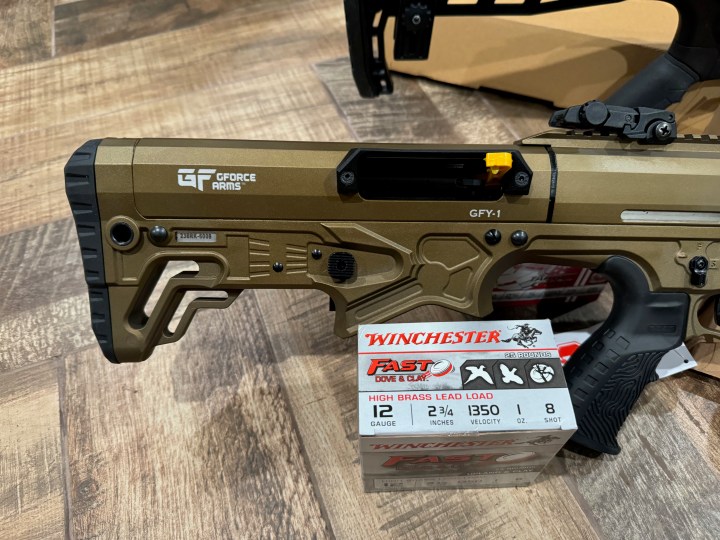
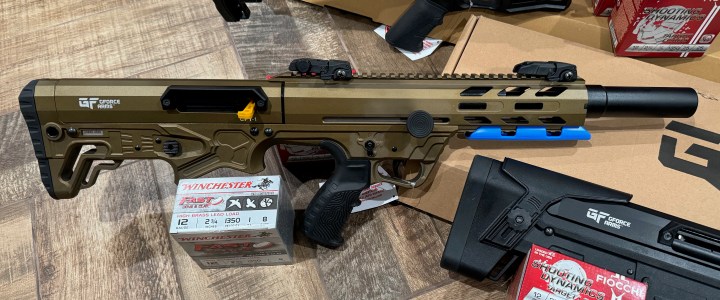
The GFY-1 is the third model we have in stock. As seen we got a bronze color on this one. Like the GF00 and GFBP it has a great out of the box feel. This model doesn’t have the adjustable cheek rest like the GFBP but it still has the flip up sights and the front fore-grip (not mounted on ours). This model has a few different color options.
GForce Arms has a decent selection of firearms and these 3 models are just a few in the semi-auto shotgun category. With good first out of the box impressions on these, we will definitely keep our eyes open for more GForce shotguns to add to inventory. GForce Arms carries a decent amount of accessories for their guns including larger capacity magazines so head over to their webpage and check them out. Let us know your thoughts on these.
If you haven’t heard of Rossi firearms yet, here is our spiel. Rossi is a Brazilian firearm manufacturer that has been around in the United States for quite some time, but it seems they are pushing out a ton of new items lately. They are fairly well known for their revolvers and have teamed up with Taurus here in the United States for their revolver lineup, but that’s not what we’re here to talk about today.
The Rossi R92 lever action is a copy of the Winchester Model 1892 and boy did they do a nice job with it. There is something about a lever gun that is just plain FUN especially the levers equipped with a big loop. The current offering from Rossi chambers these rifles in .357 magnum, .45 Colt, .44 magnum and .44-40 Winchester and they come in a great assortment of color combinations.
So far we have gotten our hands on the stainless steel octagon barrel with a gorgeous hardwood stock configuration as well as the stainless and gray laminate combination.Let’s dive into the octagon barrel first.
We were able to get an octagon barrel chambered in .44 magnum and one chambered in .357 magnum. Both of these rifles are a heck of a great value. The stock is gorgeous, has a great feel and finish to it and the octagon barrel is SWEET. The rifles have a nice smooth action and feel great in your hands. The only thing this combination needs is the big loop as opposed to the standard loop that it comes with. No worries, Rossi does offer a large loop in their store, we are on the waiting list when it comes back in stock.
The second version Rossi R92 that we have in stock is the stainless 16″ barrel with gray laminate stock. We have it chambered in .44 magnum, they make it in .357 magnum as well. This variant is more along the tactical lineup with a threaded barrel, scope rail from factory, and the shorter lighter barrel. Now the best part about this rifle, the BIG LOOP complete with leather wrap! Just something about the big loop that is so much fun. Again with this setup, great feel and build quality to it.
So if you’re looking for a reasonably priced lever gun with some varying options check out Rossi. We have some in stock and can order some of the other variants as well. These aren’t the only lever guns we have a soft spot for but the price, quality and availability of the various offerings has these on our radar. They also offer the R95 lever which is a copy of the Winchester Model 1895. We haven’t pulled the trigger on an R95 yet but there’s no doubt they are a great buy like the R92.
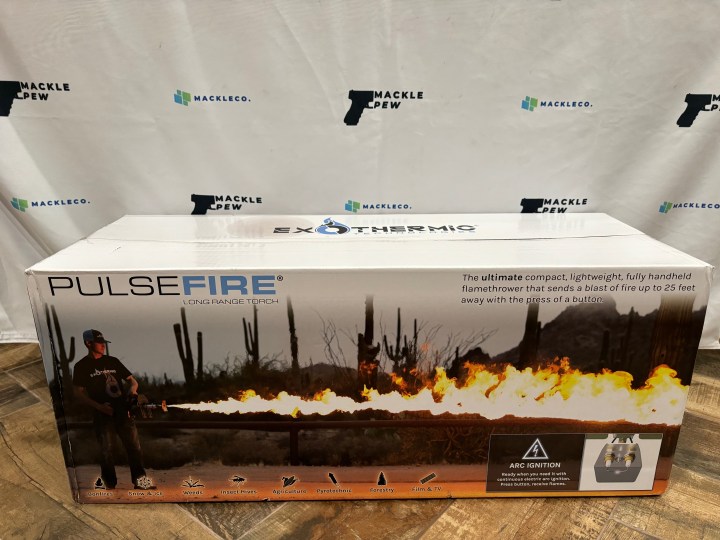
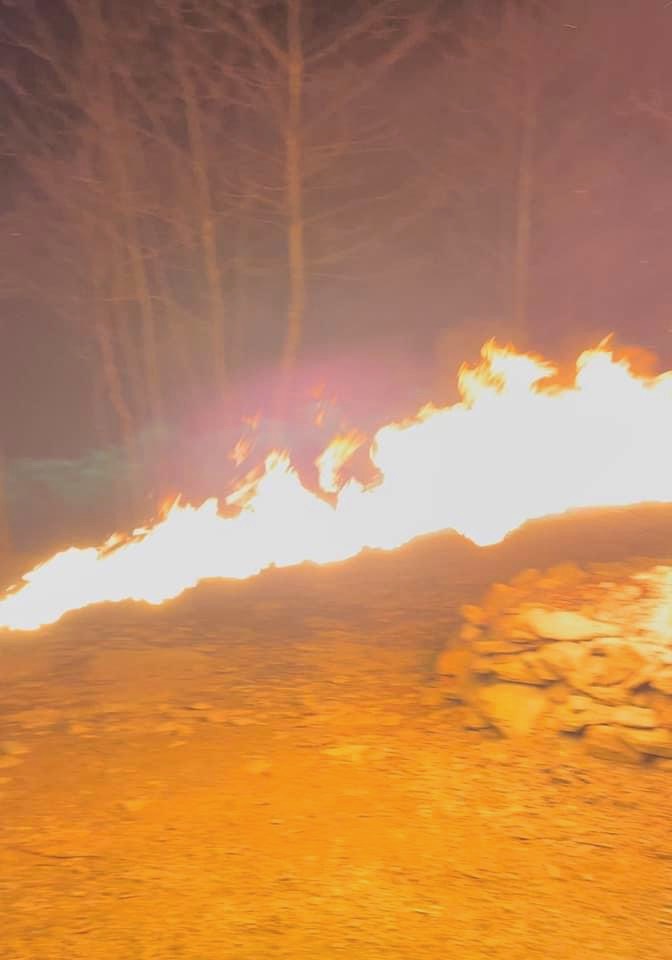
Made by Exothermic Technologies the Pulsefire Longrange torch is BAD ASS! The one we got to play with had a 50/50 gasoline and diesel fuel mixture it in. The little canister would get about 30 seconds of go time and boy was it a fun 30 seconds.
Believe it or not these actually serve a purpose more than just having some fun for a short burst. The owner that turned us on to this little toy had actually purchased it to clear weeds and brush along the river side and help cut down on pests. Now you have to be mindful and responsible when using it to clear land but it makes quick work of that unwanted brush.
What did we do with it you ask? Kick started a bonfire! A little overkill… absolutely NOT, you can never have too much bonfire starting power!
So why the quick blurb about this little toy? Well after test driving one and absolutely falling in love with it we decided that MacklePew should stock this sweet thing. It’s also worth mentioning that if you want to go completely overboard they do make an under barrel mount version of the flame thrower as well.
On top of the base torch, you can equip this puppy with a backpack fuel tank for a few minutes of fun instead of just the quick 30 seconds of glory. Yeah, yeah we know 30 seconds is more than enough for a lot of us, but for those folks that wanna showboat the backpack tank has got you covered.
Anyways check them out! If you want to have some fun or add one of these to your collection give us a shout. We think everyone needs a flamethrower in their life. We are glad to have this product on the shelves especially if the zombie apocalypse happens to pop up sometime soon.
Happy New Year from MackleCo! 2020 was an interesting year to say the least. We managed to keep on scrapping through it all and were excited for what the new year will bring.
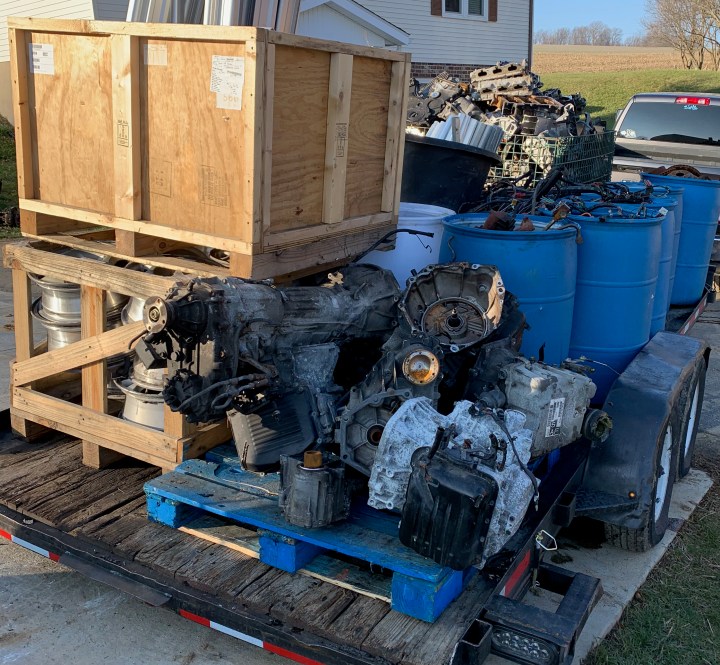
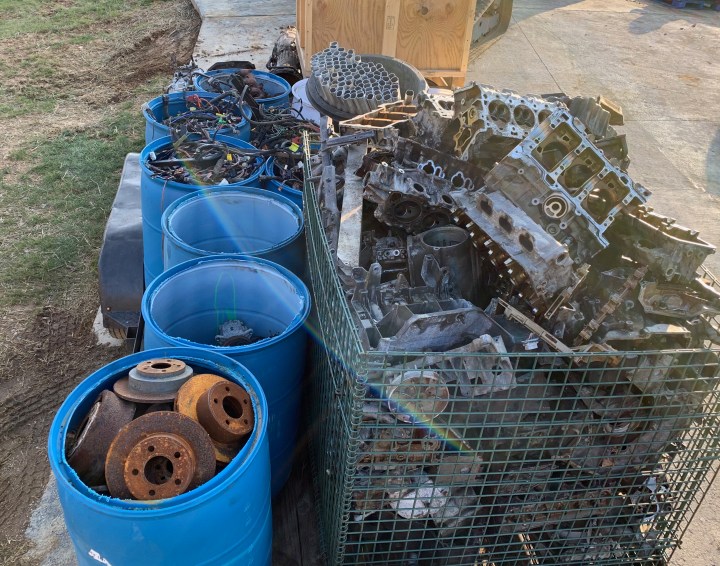
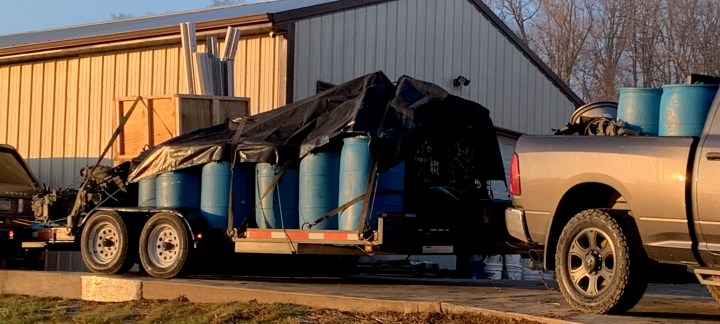
To finish off our 2020 we cleaned up the garage and took one last final scrap run. We loaded the truck and trailer with all of our sorted scrap. We separate out all of our items such as wheels, brake rotors, starters, alternators, AC compressors and more. These items are worth more than just the empty steel husks of the cars after we strip them down.
This collection what is left over from approximately 30 different vehicles. We ran out of time stripping down transmissions to sort out the cast aluminum so we sold a few of them as whole units. When possible we try to break down our metal as much as possible, but sometimes its just not feasible.
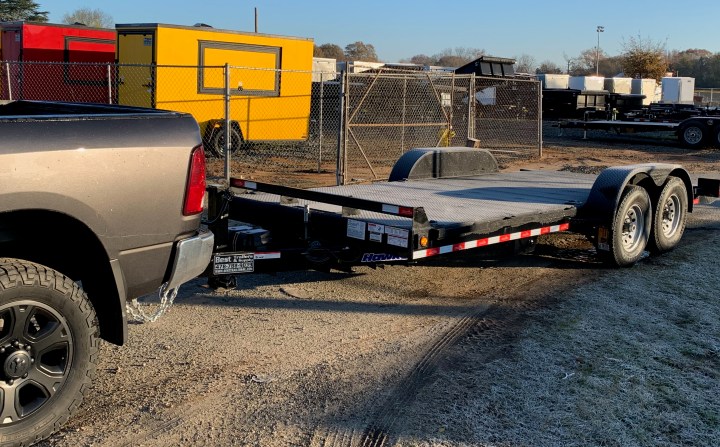
This final scrap haul for 2020 paid off and we made enough money to get some new equipment. We picked up a brand new tilt deck equipment/car hauling trailer. We are excited to put this bad boy to use in 2021 and can’t wait to see where the year takes us.
At MackleCo our main focus is on salvaging good used automotive parts for resale, but what happens to the cars after we get out the usable parts? Our YouTube channel has some video showing the tear down of cars and our fun videos where we crush whats left, however in this series of posts we are going to take a closer look at some of the work that goes into recycling an automobile.
In this first post about sorting the scrap we are going to show the tear down of wheels. We like to try and sell wheels and tires all together as usable parts, however there are plenty of times where we just can’t sell the wheels so we process them down for recycling. There are two types of wheels found on vehicles alloy metal, which usually look nicer, and steel wheels that usually come with wheel covers. Alloy wheels are made up of an aluminum alloy and bring more money in scrap than standard steel wheels, but both are still recyclable.
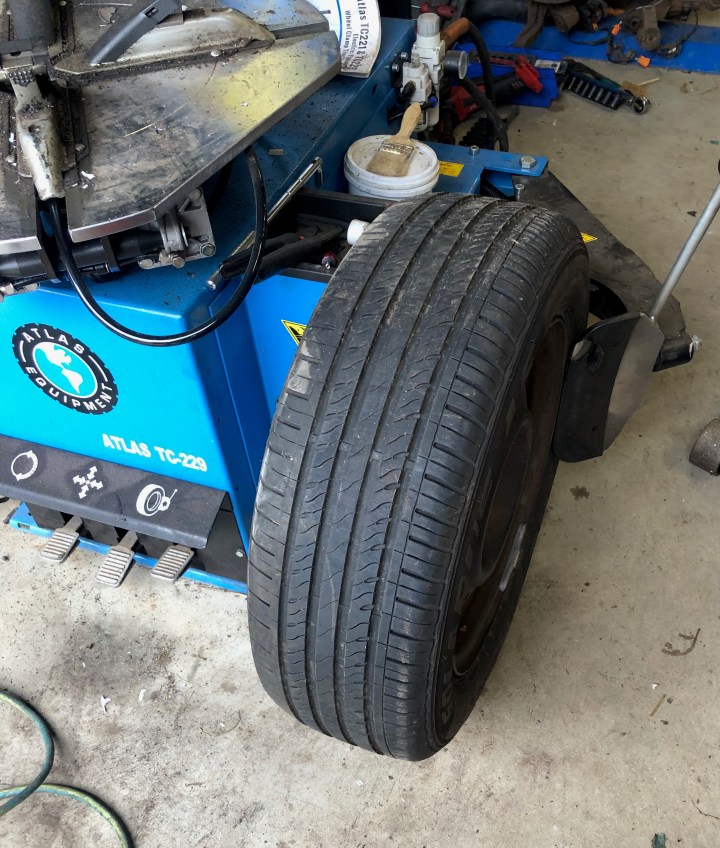
One of our purchases this year to help with the sorting of our scrap material is a tire machine. In order to recycle a wheel most recycling centers require the tires to be removed due to the costly expense to dispose of tires. Let’s get started on the tire removal process.
The wheel we are working on in this example is a steel wheel. The first step is removing the valve stem core using a special valve stem core removal tool and letting the air out of the tire.
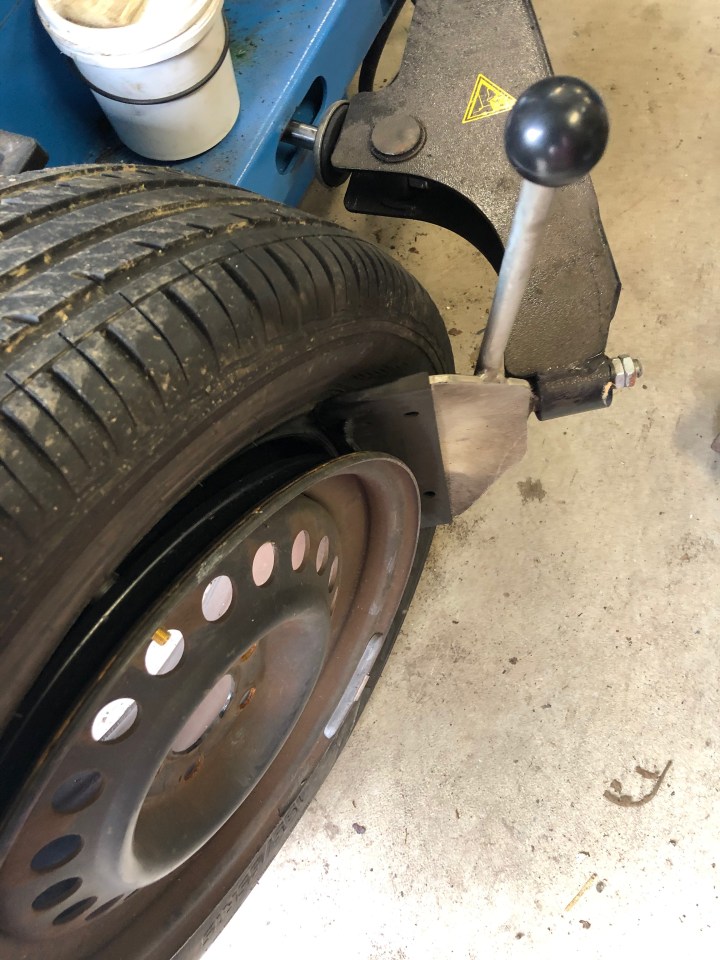
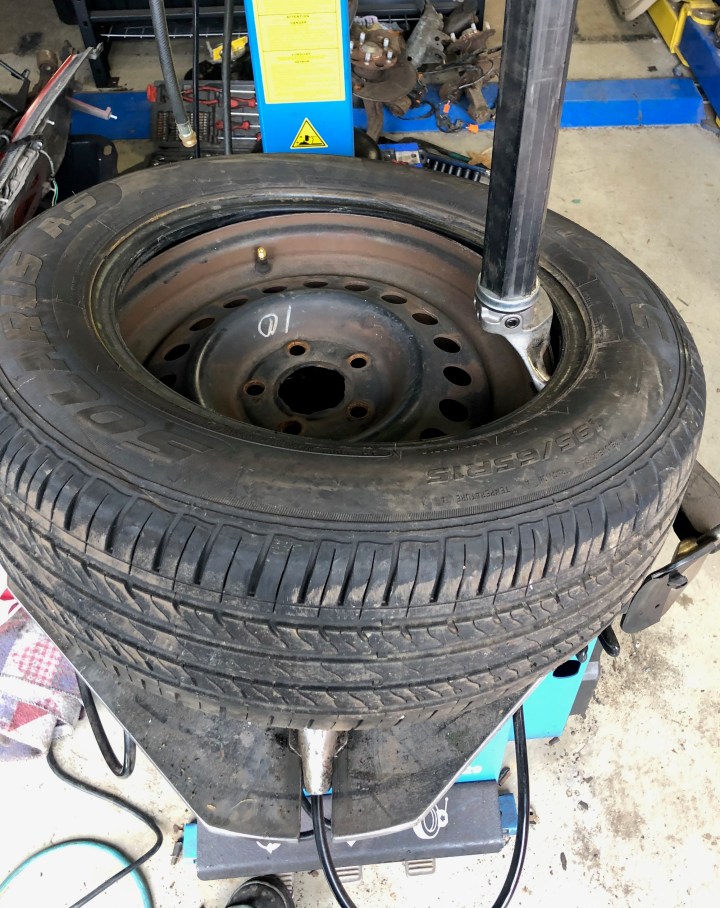
Once the air is let out of the tire we can take it over to the tire machine and start breaking it down. First up will be breaking the bead on both side of the wheel.
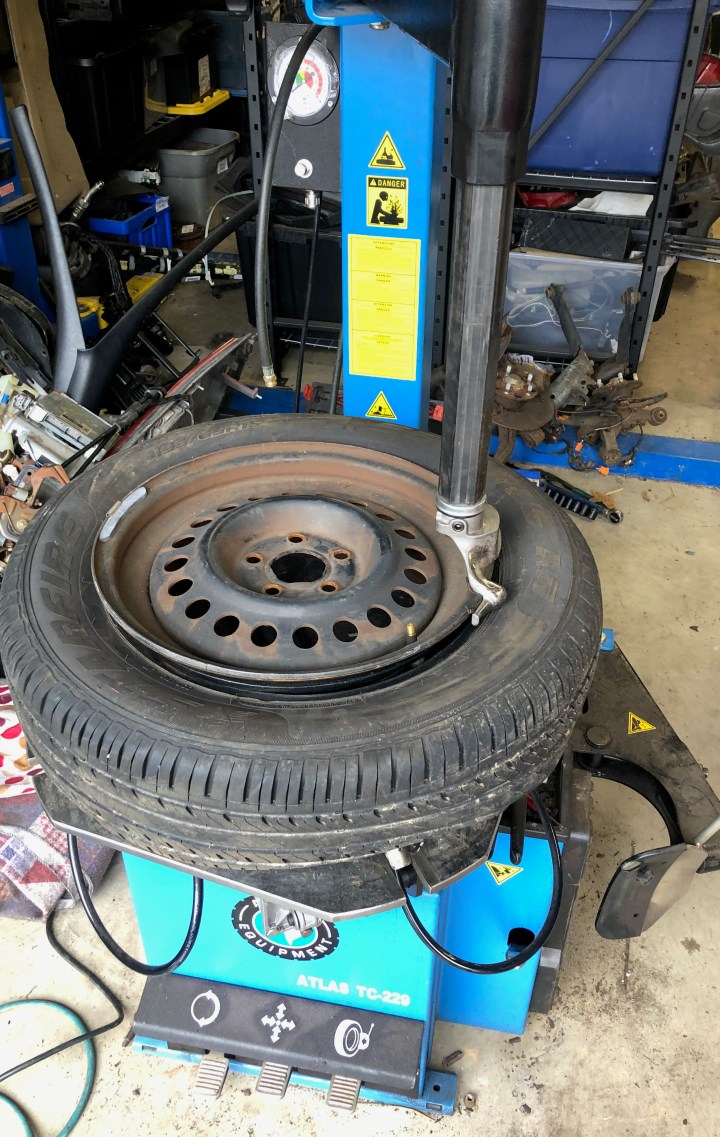
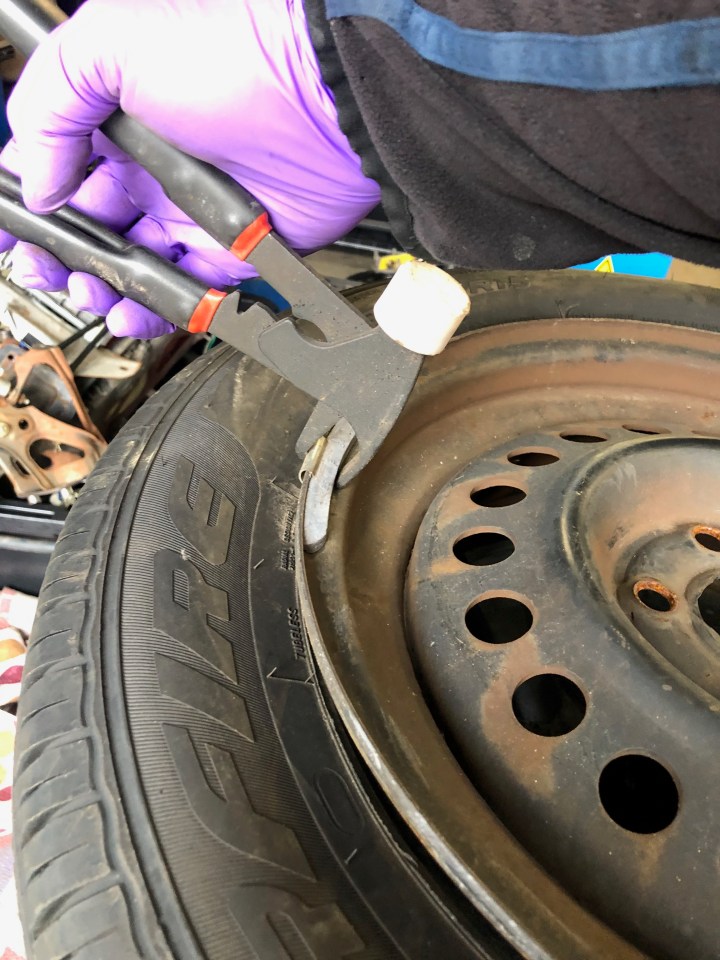
After the bead is broken we mount the wheel on the machine and pull off any wheel weights. The wheel weights are removed using a special pair of wheel weight pliers. The weights are made of lead so we collect them in a bin for recycling.
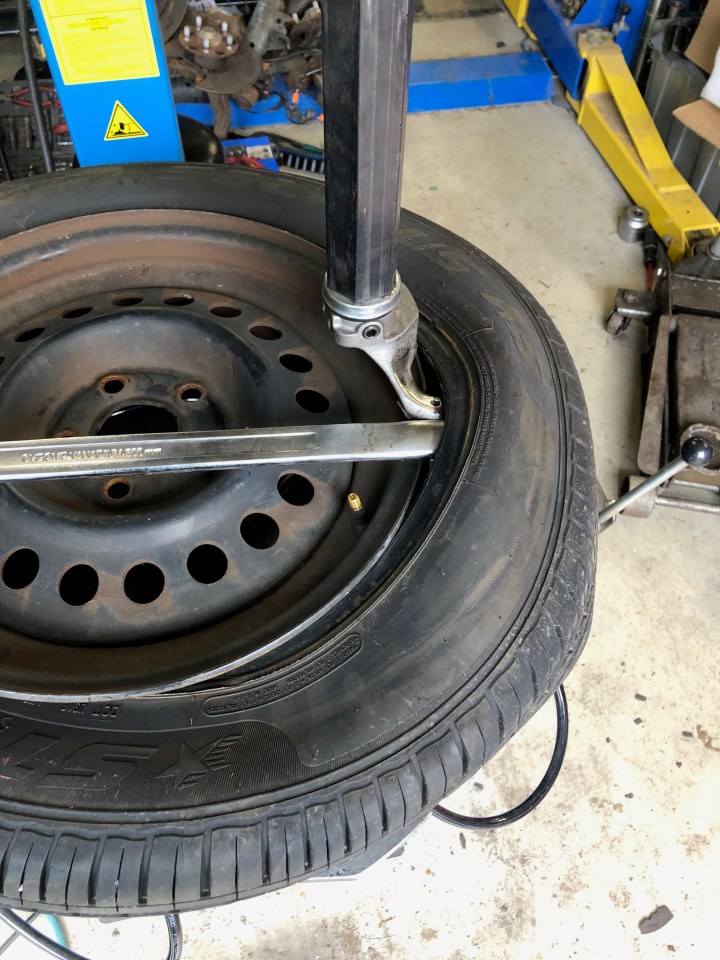
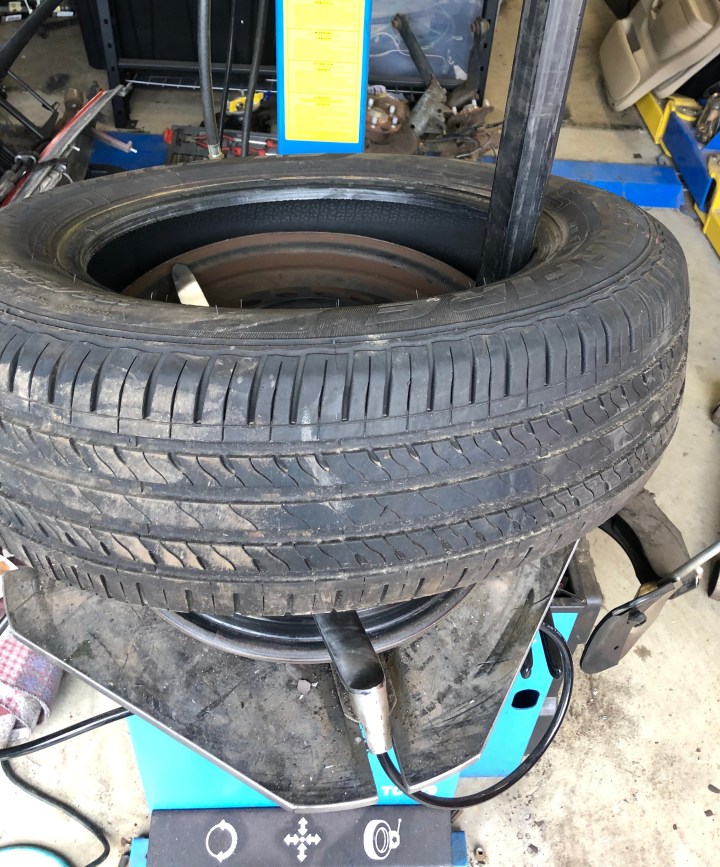
Finally using the tire spoon tool we can pop the tire off the rim and sort out the scrap. Once we have a good heavy load of wheels they get sent off to recycling. The tires will get disposed of with the local refuse service.
This is one of the many steps we take when recycling an automobile. Be sure to check back as we post more tear downs and sorting of scrap.